by
by 

Introduction to Quantum Computing
Quantum computing is an emerging field that leverages the principles of quantum mechanics to process information in fundamentally different ways compared to classical computers. While traditional systems rely on bits that exist as either 0 or 1, quantum computers use quantum bits, or qubits, which can exist in multiple states simultaneously. This capability opens the door to solving complex problems that are currently beyond the reach of even the most powerful classical machines.
Table of Contents
- Introduction
- How Quantum Computing Differs from Classical Computing
- Key Concepts
- Applications
- Challenges and Limitations
- The Future of Quantum Computing
- Conclusion
How Quantum Computing Differs from Classical Computing
At the core of classical computing lies the binary system, where operations are performed using clear, deterministic states. In contrast, quantum computing is based on principles such as superposition and entanglement. Superposition allows a qubit to represent both 0 and 1 at the same time, significantly increasing computational power. Entanglement, on the other hand, creates a connection between qubits such that the state of one directly influences another, even over large distances.
These features enable quantum computers to process a vast number of possibilities simultaneously, rather than sequentially as classical systems do. This difference is what gives quantum computing its potential advantage in certain complex computations.
Key Concepts
Several foundational concepts define how quantum computers operate:
- Qubits: The basic unit of quantum information. Unlike classical bits, qubits can exist in multiple states due to superposition.
- Superposition: A principle that allows quantum systems to exist in multiple states at once.
- Entanglement: A phenomenon where qubits become interconnected, allowing changes in one to affect others instantly.
- Quantum Gates: Operations that manipulate qubits, similar to logic gates in classical computing.
Together, these elements create a powerful framework for processing information in ways that classical systems cannot replicate.
Applications
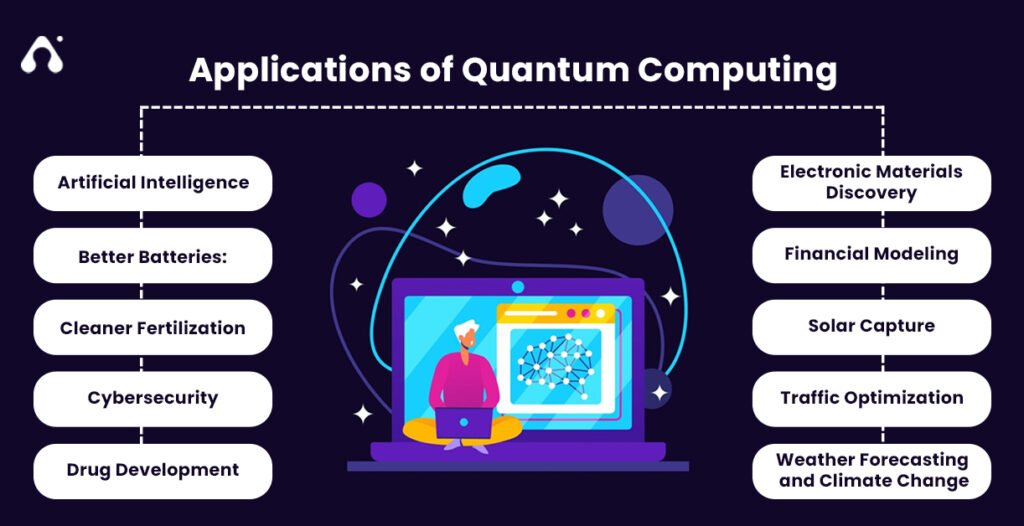
Quantum computing holds promise across a wide range of industries. In cryptography, it could break traditional encryption methods while also enabling more secure communication systems. In medicine and chemistry, quantum computers could simulate molecular structures with high accuracy, leading to faster drug discovery and material design.
Optimization problems in logistics, finance, and supply chain management could also benefit significantly. For instance, companies could find the most efficient routes or investment strategies in a fraction of the time required by classical computers.
Additionally, fields like artificial intelligence and machine learning may see improvements as quantum computing enhances data processing capabilities
.
Challenges and Limitations
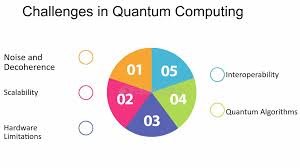
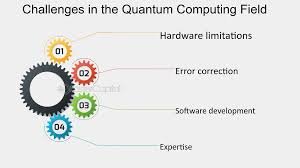
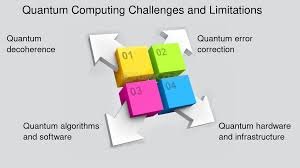
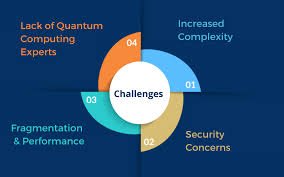
Despite its potential, quantum computing faces several significant challenges. One major issue is quantum decoherence, where qubits lose their quantum state due to interaction with the environment. This makes maintaining stable computations extremely difficult.
Another challenge is error rates. Quantum systems are highly sensitive, and even minor disturbances can lead to incorrect results. Building reliable quantum hardware requires advanced technology and extremely controlled conditions, often involving near absolute-zero temperatures.
Furthermore, developing algorithms specifically designed for quantum systems is still an ongoing area of research. The field is in its early stages, and practical, large-scale quantum computers are not yet widely available.
The Future of Quantum Computing
The future of quantum computing is both exciting and uncertain. Leading technology companies and research institutions are investing heavily in this field, striving to build more stable and scalable quantum systems. As advancements continue, we may see hybrid systems that combine classical and quantum computing to tackle complex problems more efficiently.
While it may take years before quantum computers become mainstream, their potential impact is immense. From revolutionizing industries to solving previously unsolvable problems, quantum computing represents a major step forward in the evolution of technology.
Conclusion
Quantum computing is a transformative technology that challenges the traditional limits of computation. By utilizing the unique properties of quantum mechanics, it offers unprecedented computational power and new possibilities across various domains. Although there are significant challenges to overcome, ongoing research and innovation continue to push the boundaries of what is possible. As the field evolves, quantum computing is poised to play a crucial role in shaping the future of science and technology.